
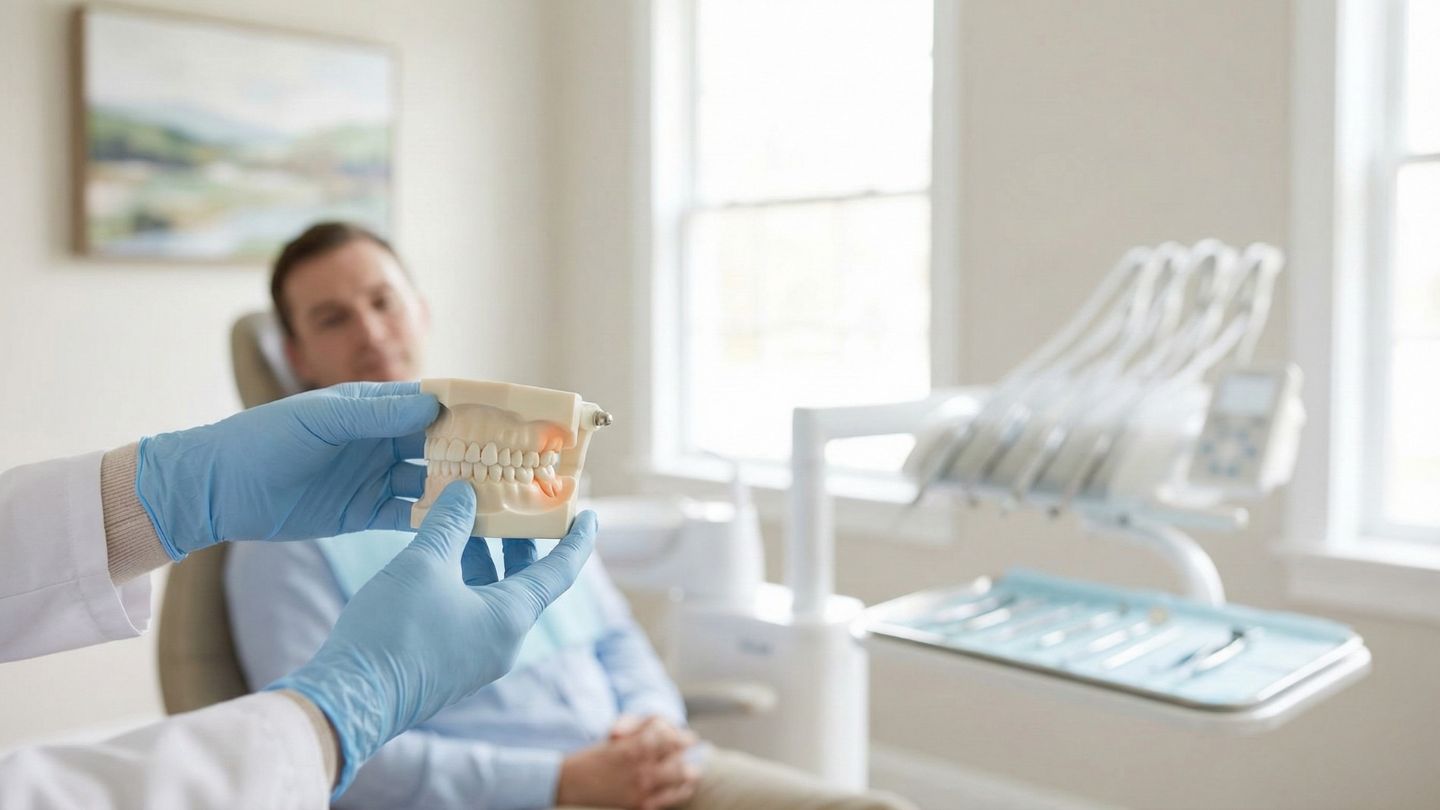
Facing a wisdom tooth extraction can feel stressful. That’s normal. The good news is that the process is predictable, and most people recover without issues when they follow proper aftercare.
This guide explains what happens from your first scan to the first week of healing, so you know exactly what to expect at Walden Dental NY.
Dr. Sayeed’s Clinical Insight
“Patients often ask whether they should wait to have their wisdom teeth removed. In my experience, patients who remove impacted wisdom teeth in their late teens or early 20s tend to have an easier recovery than those who wait until their 30s. At a younger age, the roots and surrounding bone are usually less developed, which can make the removal less complex and healing smoother.”
Why do wisdom teeth often need to be removed?
Wisdom teeth (third molars) usually appear in the late teens or early 20s. Many mouths simply don’t have enough space to accommodate them, which can lead to problems such as:
- Impaction: The tooth becomes trapped in the gum or jawbone
- Crowding: Pressure on nearby teeth, sometimes shifting previous orthodontic work
- Hygiene problems: The back of the mouth is difficult to clean, increasing the risk of decay and gum irritation
- Pathology: In rare cases, cysts can form around impacted teeth
If you’re experiencing jaw pain, swelling, recurring gum infections near the back molars, or food frequently getting stuck, it’s a good idea to schedule an evaluation.
What to expect: a simple timeline
1. Consultation and imaging
At our Walden, NY dental office, we examine your mouth and take X-rays or 3D imaging when needed. This helps us assess tooth position, root shape, and proximity to nerves or sinuses. Based on this, we determine whether the extraction will be simple or surgical and discuss anesthesia options based on your comfort level and medical history.
2. The procedure (usually under 90 minutes)
Most patients are surprised by how quick the appointment feels. The exact time depends on whether the teeth are erupted, partially impacted, or fully impacted.
Comfort options
- Local anesthesia: You remain awake, but the area is fully numb
Pain vs. pressure
You should not feel sharp pain during the procedure. You may feel pressure or pushing sensations for short moments. This is normal and means the anesthesia is working—it blocks pain signals, not movement.
Recovery: a day-by-day guide (first week)
Recovery varies slightly from person to person, but most patients in the Wallkill Valley follow this general pattern.
Days 1–2: rest and protect the clot
- What you may feel: Soreness as numbness wears off; swelling and jaw tightness
- What to do:
- Rest with your head slightly elevated
- Use ice packs (20 minutes on / 20 minutes off)
- Eat liquid or very soft foods such as yogurt, smoothies (no straw), and cooled soup
- Important recovery warning: Do not use straws, smoke or vape, or spit forcefully. These actions create suction that can dislodge the blood clot and lead to dry socket.
Days 3–4: the turning point
- What you may feel: Swelling often peaks and then begins to decrease
- What to do:
- Begin gentle saltwater rinses after meals
- Introduce soft foods like scrambled eggs, mashed potatoes, and pasta
Days 5–7: back to routine
- What you may feel: Jaw stiffness continues to improve
- What to do:
- Most people return to work or school unless their job is physically demanding
- Slowly increase food texture, but avoid crunchy foods like chips or nuts for a bit longer
- Full gum healing takes longer than one week, even if you feel normal.
Dry socket: how to reduce the risk
Dry socket occurs when the blood clot that forms during healing is disrupted, exposing the bone and nerves underneath. It is painful but often preventable.
Best prevention habits
- No smoking or vaping for at least the first few days
- No drinking through straws
- Avoid vigorous rinsing or spitting
- Follow your aftercare instructions closely
When to call the dentist urgently
Contact our Walden dental office immediately if you experience:
- Bleeding that doesn’t slow after firm gauze pressure
- Fever or chills
- Swelling that worsens after day 3
- Pus, a persistent bad taste, or increasing pain
- Severe pain radiating toward the ear (possible dry socket)
- Difficulty breathing or swallowing
Why patients choose Walden Dental NY
We plan both the extraction and the recovery. Our approach includes advanced 3D imaging for safety, clear aftercare instructions, and follow-up support if anything feels off.
If you’re experiencing jaw pain or think your wisdom teeth are coming in, don’t wait for it to become an emergency.


It is not often that you find this kind of care, despite being a business, patient care seems to come first. A shout out to Sumayra too, who is quick to return calls and is so reassuring!

Would and do recommend to everyone friends, family and anyone i meet. - Mr tucen


Very welcoming staff. Dr B (I'm sorry I
forget names) was friendly and competent. And she was gentle which is important for those of us with dental anxiety .
Highly recommend!


I had gone through Dentaquest’s provider portal and after visiting 7 other offices (not exaggerating), Walden was picked for the long term dental care of my family members.
Competent, transparent, thorough, they keep informed about procedure and how they plan on approaching my insurance to maximize my health to cost ratio.
They almost make the American health and dental care system bearable.
10/10

My only negative experience is that they use plug in air fresheners and I'm highly allergic. I hope they take this into consideration for sensitive patients and remove them permanently. They aren't needed as the office is pristine clean. Do not hesitate to switch to them if you're looking for a new dental office. I regret not using them years ago!

FAQs
What does wisdom teeth removal feel like?
With standard local anesthesia, the entire area is completely numbed so that you will not feel sharp pain. You may feel brief pressure or slight movement as the tooth is gently loosened. Our clinical team works at a careful, deliberate pace to ensure you remain entirely comfortable throughout the process.
How long does recovery take?
Many patients feel noticeably better within a few days and return to normal routines within a week. Gum healing usually continues for 1–2 weeks or longer, depending on the case.
What does it cost?
Costs depend on whether the teeth are erupted or impacted, and how many are removed. Simple extractions typically range from $150 to $400 per tooth, depending on complexity, and transparent, out-of-pocket pricing or flexible financing options will be fully discussed during your consultation.
Are there risks?
As with any procedure, risks exist. The most common issues are swelling, soreness, and dry socket. More serious complications are uncommon, and Dr. Sayeed will review your individual risk factors before treatment.
Does insurance cover wisdom teeth removal in New York?
Many dental plans cover a significant portion of medically necessary extractions, though coverage varies. Our team checks your benefits in advance so you know what to expect.
 Dr. Ibrahim Sayeed is a licensed Dentist in the State of New York and the lead practitioner at Walden Dental NY. A graduate of the University of the Pacific School of Dentistry with post-graduate training at Brookdale Hospital Medical Center, he has extensive experience in restorative, cosmetic, and preventive dental care.