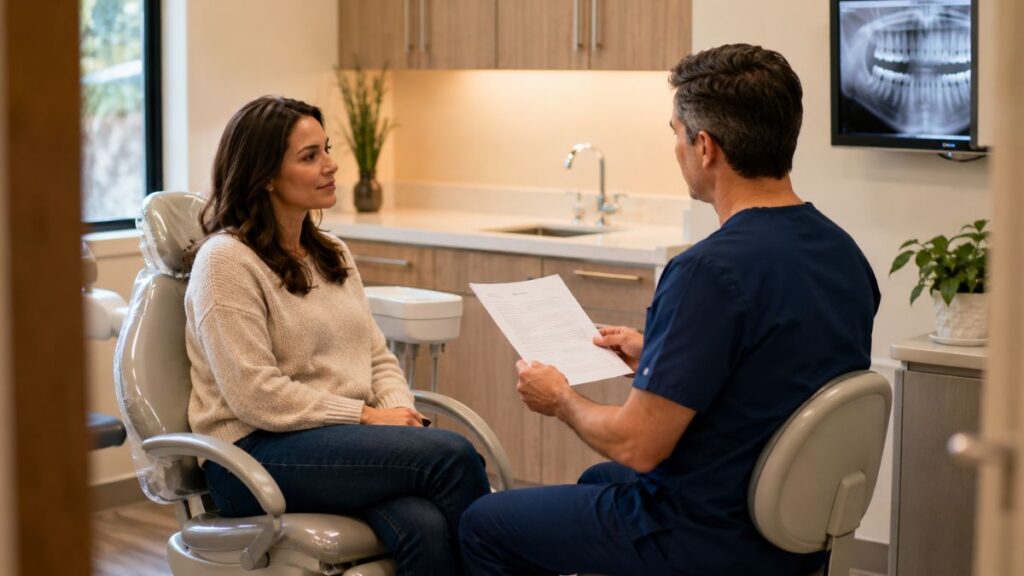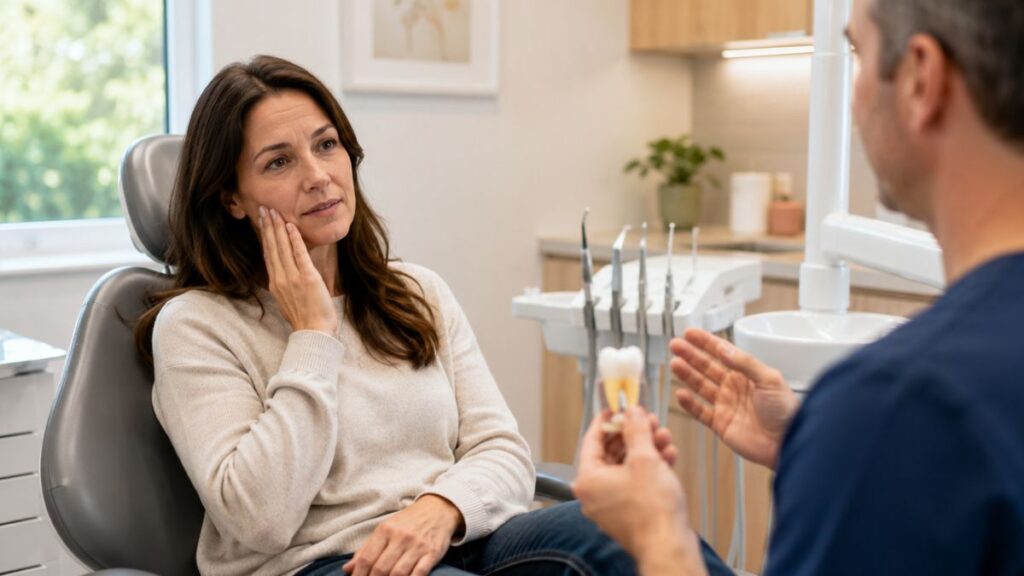
It is a common misconception that if you didn’t have perfect dental care or habits as a child, your adult teeth are destined to fail.
As a practicing dentist, many of the adult patients I see at Walden Dental NY present with cavities, worn-down enamel, or bite misalignments that were actually set in motion decades ago. The dental environments and habits we experience during our developmental years heavily influence our adult oral anatomy.
At our Walden Dental clinic, our conservative philosophy is focused entirely on helping adult patients understand, halt, and reverse the structural damage caused by early childhood patterns, all within a comfortable, non-judgmental environment.
The Long-Term Impact of Childhood Patterns on Adult Teeth
When I perform a comprehensive dental checkup for new adult patients, we can often trace current oral health challenges back to a few specific childhood variables:
1. Deep Enamel Grooves and Missing Early Sealants
If you did not receive preventative treatments like dental sealants or proper fluoride exposure as a child, the deep grooves of your adult molars may have quietly harbored microscopic decay for years. This slow-moving decay compromises the inner structures of the teeth, frequently leading to sudden tooth fractures or deep cavities in adulthood.
2. The Childhood “Sugar Frequency” Habit
Diets high in hidden sugars during youth (such as juices, soda, and sticky snacks) alter the bacterial landscape of the mouth, making it more acidic. If a frequent snacking pattern or a preference for acidic beverages carries over into your adult life, it creates a chronic environment that actively strips away adult enamel, leaving teeth highly sensitive to hot and cold.
3. Prolonged Pacifier Use or Thumb-Sucking
Extended thumb-sucking or pacifier habits past early childhood can permanently alter the shape of the developing jaw ridge. In adulthood, this manifests as crowded teeth, an open bite, or uneven tooth wear because the top and bottom teeth do not meet correctly. This misalignment places excessive mechanical stress on your back molars.
The Realistic Roadmap to Reclaiming Your Smile
Whatever your childhood oral history looks like, it stays in the past. At Walden Dental NY, we operate a strict “no-lecture zone.” We do not judge you for missed appointments or poor habits from years ago; we focus entirely on the clinical steps needed to make you healthy and pain-free today.
We design individual restorative roadmaps for our adult patients based on their specific goals, timeline, and budget:
- Halting Active Decay: Our first priority is getting you out of discomfort and stopping active infections. Minor surface decay is easily resolved with seamless, tooth-colored dental fillings.
- Restoring Structural Strength: For adult teeth that have been severely weakened by old, failing fillings or long-term structural neglect, we use custom porcelain crowns. A crown acts as a protective cap, holding the remaining healthy tooth structure together and preventing future splits.
- Replacing Missing Teeth: If childhood neglect ultimately led to tooth loss later in life, you do not have to live with gaps or loose bridges. We specialize in permanent, stable dental implants that look, feel, and function exactly like natural teeth.
Conclusion: It’s Never Too Late for an Adult Reset
Your dental past does not have to dictate your dental future. Reclaiming your oral health as an adult is a powerful step toward total body wellness and self-confidence. If you are ready for honest, compassionate, and strictly adult-centered dental care, our team is here to welcome you. Ready to rebuild your smile?
Call 845-713-4822 or book your appointment online. Dr. Sayeed’s first priority is making you feel comfortable and informed.
Frequently Asked Questions
Can the effects of childhood dental neglect be reversed in adulthood?
Yes. Modern adult restorative dentistry can safely repair and reverse the consequences of long-term dental neglect. Dr. Sayeed can stop active decay with conservative fillings, reinforce weakened enamel with porcelain crowns, and permanently replace missing teeth using advanced dental implants.
Does Walden Dental NY provide pediatric or children’s dentistry?
No. Walden Dental NY is an adult-focused dental practice. We specialize exclusively in adult restorative, cosmetic, and general dentistry, allowing us to tailor our entire clinical environment and pace to mature dental needs and anxieties.
What happens if a cavity from an older childhood habit is left untreated?
Because outer tooth enamel has no nerve endings, a cavity can grow silently for years without causing any pain. However, if left untreated, the decay will eventually breach the central pulp chamber of the tooth. This causes a severe internal tooth infection or a painful root abscess that will require a root canal or tooth extraction.
 Dr. Ibrahim Sayeed is a licensed Dentist in the State of New York and the lead practitioner at Walden Dental NY. A graduate of the University of the Pacific School of Dentistry with post-graduate training at Brookdale Hospital Medical Center, he has extensive experience in restorative, cosmetic, and preventive dental care.