Takeaway
Conservative dentistry is not about avoiding necessary dental treatment. It is about avoiding unnecessary treatment. I look first at what can safely be monitored, repaired, strengthened, or saved before recommending a more extensive procedure. When treatment is necessary, the goal is to address the disease without removing more healthy tooth structure than necessary.
Conservative dentistry means treating what genuinely needs treatment while preserving as much healthy natural tooth structure as possible. At Walden Dental NY, that principle guides how I evaluate adult patients: diagnose the problem carefully, explain what I see, and choose the least invasive treatment that can predictably protect your oral health.
My philosophy is simple: your natural teeth are worth preserving whenever they can be kept healthy and functional.
What Does Conservative Dentistry Actually Mean?
Conservative dentistry is a treatment philosophy centered on preservation, accurate diagnosis, prevention, and appropriate intervention.
Modern minimal-intervention dentistry similarly emphasizes preserving healthy dental tissues and using prevention, remineralization, repair, and minimally invasive treatment when clinically appropriate. (PMC)
For me, that means asking several questions before recommending treatment:
- Is this tooth healthy enough to monitor?
- Can a small problem be treated before it becomes a large one?
- Can damaged tooth structure be repaired rather than replaced?
- Can the natural tooth still be predictably saved?
- Would a more extensive procedure genuinely improve the prognosis?
The answer is different for every tooth and every patient.
Conservative dentistry is also not a dental specialty title in the United States. Dr. Ibrahim Sayeed, DDS, is a licensed general dentist. The ADA-recognized specialty list does not include “conservative dentistry”; here, the term describes my philosophy of care.
Why Preserving Natural Tooth Structure Matters
Healthy enamel and dentin cannot simply be recreated once they are removed.
Dental materials can repair damaged teeth remarkably well, but a restoration is still replacing tissue that has been lost. This is why preserving sound tooth structure can matter for a tooth’s long-term strength and future treatment options.
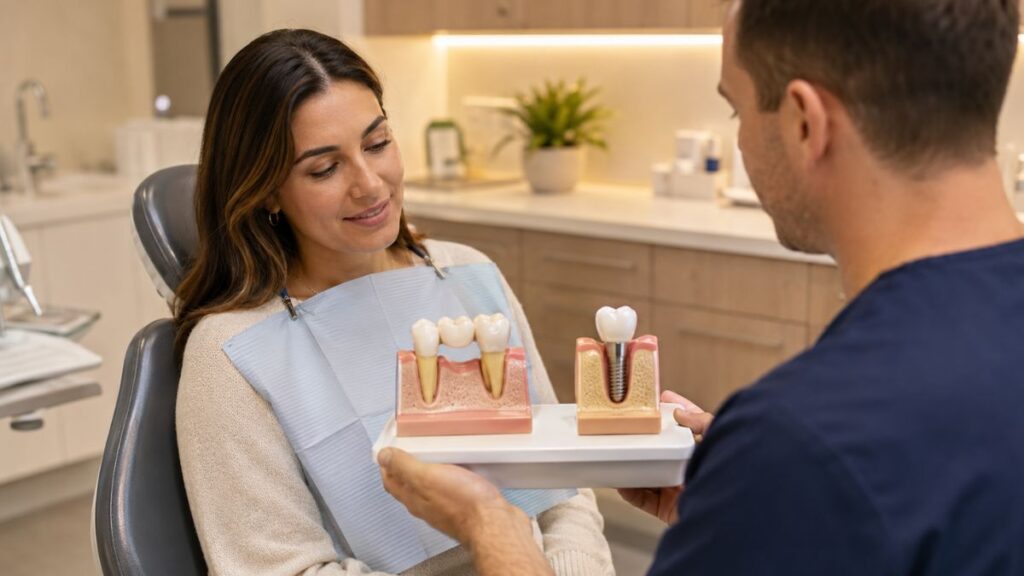
A practical example is a cavity. When a tooth can be predictably restored with a conservative tooth-colored filling, there may be no reason to remove enough structure for a crown.
But that principle also works in the opposite direction. If a tooth is badly fractured or structurally weak, a dental crown may be the more conservative long-term decision because simply placing another filling could leave the tooth vulnerable.
Conservative does not always mean smaller treatment. It means the treatment that makes clinical sense without doing more than necessary.
What My Conservative Approach Looks Like During an Appointment
I do not start an examination by deciding which procedure a patient should receive. I start by identifying the cause of the problem.
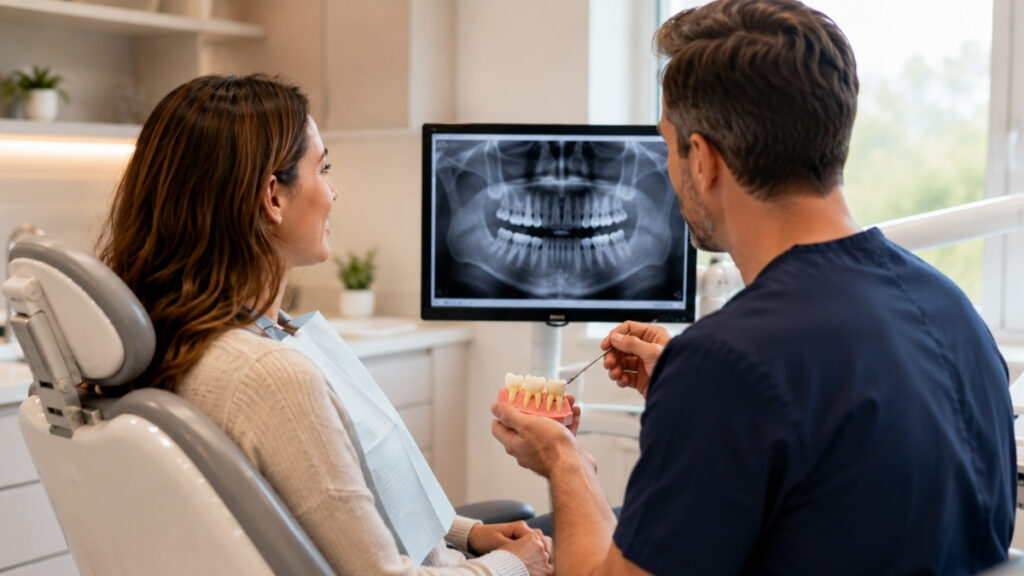
At Walden Dental NY, that may include an examination, digital X-rays when clinically appropriate, evaluation of existing restorations, gum health, bite, symptoms, and the remaining strength of the tooth.
- From there, I explain the options.
- Sometimes the answer is monitoring.
- Sometimes it is repairing a small area.
- Sometimes a weakened tooth needs greater protection.
And sometimes an infection has progressed far enough that a root canal or another treatment is necessary to give the tooth a reasonable chance of being saved.
My job is not to make every dental treatment sound simple. It is to tell you what I believe is happening, which options are realistic, and what may happen if treatment is delayed.
Conservative Dentistry Does Not Mean “Wait Until It Hurts”
One of the biggest misunderstandings about conservative care is that doing less always means waiting longer. It does not.
Early treatment can sometimes be the most conservative choice. A small problem may require less intervention than the same problem after it has progressed. Decay that reaches deeper into a tooth, a crack that spreads, or untreated infection can reduce the number of tooth-preserving options available later.
That is why routine dental checkups matter even when nothing hurts. Conservative dentistry balances two risks: treating unnecessarily and waiting too long to treat something that is actively getting worse.
What This Means If You Are Anxious About Dental Treatment
You deserve to understand why treatment is being recommended before you agree to it.
Many adults who come to our Walden office are worried that one dental visit will suddenly turn into a long list of procedures. Others have avoided care because of embarrassment, anxiety, or an experience where they did not feel heard.
I do not believe in lectures or pressure. I explain what is urgent, what can reasonably wait, what should be monitored, and what options exist. If there is more than one reasonable path, we discuss the tradeoffs. That clarity is part of conservative care too.
Why This Philosophy Matters to Dr. Sayeed
I developed my approach through years of general, restorative, and continuing dental education. I graduated from the University of the Pacific School of Dentistry and completed a General Practice Residency at Brookdale Hospital Medical Center. I continue advanced education while caring for adults throughout Walden and Orange County. But credentials alone do not decide what treatment a tooth needs.
The question I keep coming back to is:
What would I recommend if the goal were to keep this tooth healthy for as long as reasonably possible?
Sometimes that means doing less today. Sometimes it means treating the problem before it becomes harder to manage.
Either way, the recommendation should have a clear reason.
Walden Dental NY also provides clear treatment-plan information before care, coordinates applicable PPO insurance benefits, and offers Sunbit financing for eligible patients so financial questions can be discussed without pressure.
Frequently Asked Questions
What is conservative dentistry?
Conservative dentistry is an approach that aims to preserve healthy natural tooth structure while appropriately treating disease or damage. It may involve prevention, monitoring, repair, or restorative treatment depending on the condition of the tooth.
Does a conservative dentist avoid crowns or root canals?
No. A conservative dentist may recommend a crown, root canal, or other treatment when it provides the most predictable way to protect or save a tooth. The goal is to avoid unnecessary intervention—not necessary treatment.
Can early dental treatment be more conservative?
Yes. Treating certain problems while they are smaller may preserve more healthy tooth structure and prevent the need for more extensive treatment later.
Is Dr. Sayeed a conservative dentistry specialist?
No. Dr. Ibrahim Sayeed, DDS, is a licensed general dentist. “Conservative dentistry” describes his treatment philosophy rather than a recognized U.S. dental specialty.
Start With an Honest Diagnosis, Not a Procedure
If you are looking for a conservative dentist in Walden, NY, you should not have to wonder whether every dental problem automatically leads to the biggest treatment.
At Walden Dental NY, I begin by asking what is happening, what can be preserved, and what level of treatment is genuinely justified.
If you have been putting off an appointment because you are worried about being pressured into dental work, start with a conversation and an examination. You may have more options than you think, and understanding those options is the first step toward making a decision you feel comfortable with.
Call 845-713-4822 or book an appointment at Walden Dental NY. Dr. Sayeed’s first priority is making you feel comfortable.
 Dr. Ibrahim Sayeed is a licensed Dentist in the State of New York and the lead practitioner at Walden Dental NY. A graduate of the University of the Pacific School of Dentistry with post-graduate training at Brookdale Hospital Medical Center, he has extensive experience in restorative, cosmetic, and preventive dental care.