
Summary
Endodontics focuses on problems inside the tooth, including the nerve, pulp, and root canals. Periodontics focuses on the gums, supporting bone, and tissues around teeth and dental implants. At Walden Dental NY, Dr Ibrahim Sayeed, DDS, identifies the source of pain or infection first, provides appropriate general dental care, and recommends specialist evaluation when needed.
Endodontics treats disease or injury inside a tooth. Periodontics treats the gums and bone supporting teeth and implants. Understanding periodontics vs endodontics helps you describe the problem, but symptoms can overlap, so a dental examination is often the safest starting point.
At Walden Dental NY, I begin with the cause, not a specialist label. My goal is to determine whether the problem starts inside the tooth, around its supporting tissues, or in both areas.
The Difference at a Glance: Periodontics vs Endodontics
| Area | Endodontics | Periodontics |
|---|---|---|
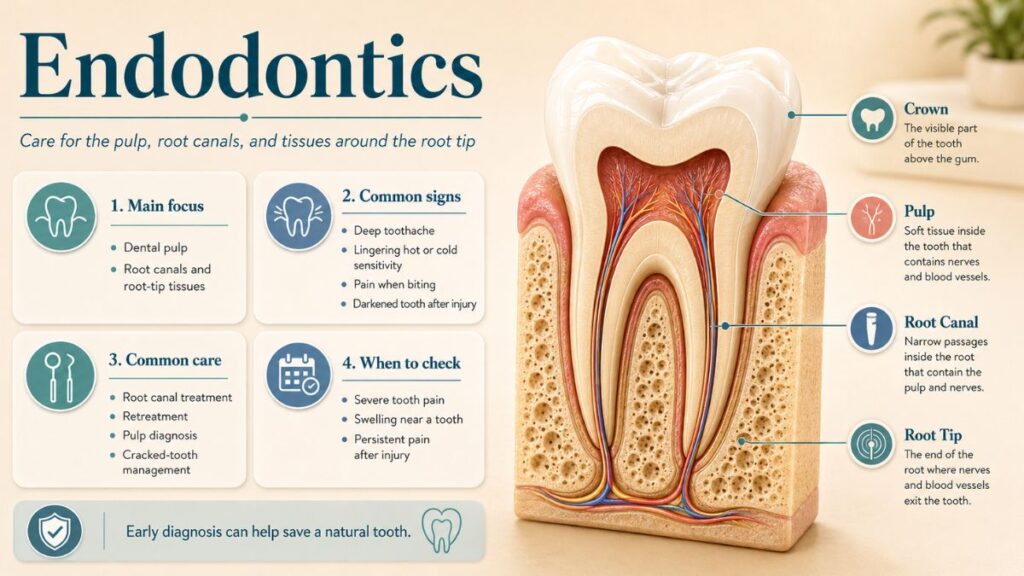
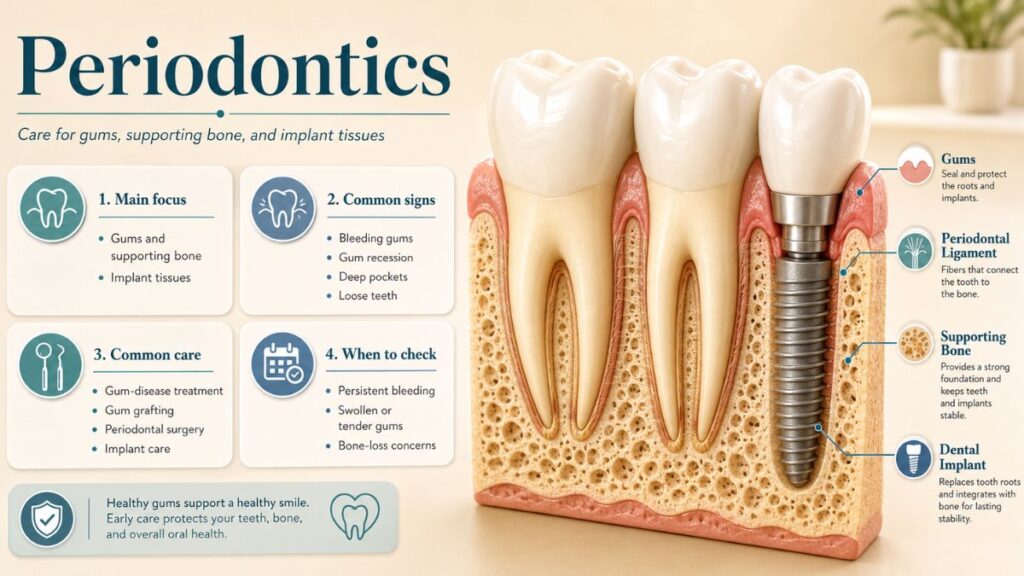
| Main focus | Dental pulp, root canals, and tissues near the root tip | Gums, periodontal ligament, supporting bone, and implant tissues |
| Common signs | Lingering temperature sensitivity, deep toothache, pain when biting | Bleeding gums, recession, deep pockets, loose teeth, bone loss |
| Common care | Root canal treatment, retreatment, pulp diagnosis | Gum-disease treatment, grafting, periodontal surgery, implant care |
An abscess can start inside a tooth and appear as gum swelling, so a practical periodontist vs endodontist comparison cannot rely on location alone.
What Is an Endodontist?
An endodontist is a dentist with advanced speciality education focused on dental pulp, root canals, and tissues surrounding tooth roots. The American Association of Endodontists (1) describes these specialists as experts in diagnosing tooth pain and performing root canal treatment.
What Do Endodontists Do?
Their work commonly includes:
- Root canal treatment
- Retreatment of a previously treated tooth
- Diagnosis of difficult-to-locate tooth pain
- Management of cracked or injured teeth
- Selected surgery near a tooth root
The recognized speciality includes disease and injury involving the pulp and tissues around the roots.
What Is a Periodontist?
A periodontist is a dentist with advanced speciality training in gum disease, supporting bone, and dental implant placement. The American Academy of Periodontology (2) states that periodontists complete three additional years of education beyond dental school.
What Does a Periodontist Do?
Common areas of care include:
- Advanced gum-disease treatment
- Gum grafting for selected recession
- Regenerative or bone-related procedures
- Dental implant placement
- Treatment of inflammation around implants
Periodontists provide surgical and nonsurgical periodontal care, including implant treatment.
Periodontist vs Endodontist: Which Symptoms Point Where?
An internal tooth problem may be more likely when you have:
- Severe or spontaneous pain in one tooth
- Lingering sensitivity after hot or cold
- Pain when biting
- A darkened tooth after an injury
- Swelling near a tooth with deep decay or a crack
A periodontal problem may be more likely when you have:
- Bleeding or swollen gums
- Persistent bad breath
- Gum recession or exposed roots
- Several loose or shifting teeth
- Known bone loss
- Bleeding or tenderness around an implant
Symptoms overlap, so this periodontics vs endodontics guide cannot replace X-rays, pulp testing, gum measurements, and a clinical examination.
Difference Between Endodontist and Dentist
A general dentist provides broad care, including examinations, fillings, crowns, preventive treatment, diagnosis, and many restorative procedures. An endodontist limits practice to problems involving the tooth pulp, roots, and related tissues.
General dentists may perform appropriate root canals. Referral may be recommended for unusual anatomy, retreatment, difficult diagnosis, significant trauma, or another complex condition. Endodontists have focused postgraduate education in tooth-saving treatment.
Where Dental Implants Fit
Implants are associated with periodontics because periodontists receive specific training in gum tissues, supporting bone, and implant placement. Appropriately trained general dentists and other dental specialists may also provide dental implant care within their education, experience, and professional scope.
A useful practical point in periodontics vs endodontics is that implant planning may involve extraction, bone and gum assessment, implant placement, and the final restoration. The clinician coordinating the case must understand how each stage affects the next.
Dr Sayeed’s Approach in Walden, NY
Walden Dental NY presents Dr. Ibrahim Sayeed, DDS, as a licensed general dentist, not under the specialist title of endodontist or periodontist. His published credentials include a DDS from the University of the Pacific, a general practice residency at Brookdale Hospital Medical Center, ongoing post-graduate training on implants, cosmetic dentistry, and extensive experience with root canal and restorative care.
When evaluating periodontics vs endodontics, I may use:
- Digital X-rays to examine decay, roots, infection, and bone levels
- Pulp testing when the nerve’s condition is uncertain
- Bite and percussion tests to reproduce symptoms
- Periodontal probing to measure gum pockets
- Mobility, recession, and implant-tissue assessment
I treat cases that fit my training and clinical judgment. When specialist evaluation would provide a safer or more predictable path, I explain why and coordinate the referral.
When Should You Call Promptly?
Contact a dentist promptly for facial swelling, fever with dental pain, drainage, rapidly increasing pain, a loose adult tooth, or difficulty opening your mouth.
Seek urgent medical care if swelling affects breathing or swallowing.
A routine appointment is appropriate for mild sensitivity, occasional gum bleeding, recession, or persistent symptoms without severe swelling. Waiting until pain becomes intense can reduce conservative treatment options.
Start With the Right Diagnosis in Walden, NY
You do not need to choose a specialist before your first appointment. A focused examination can show whether symptoms come from the tooth’s nerve, the supporting gums and bone, or a combination of both.
Walden Dental NY provides calm, adult-focused care for patients from Walden, Montgomery, Newburgh, Pine Bush, Maybrook, Crawford, and across Orange County. I will explain what I find, what can be treated conservatively, and when referral is the responsible choice.
If tooth pain, bleeding gums, a loose tooth, or an implant concern has left you unsure where to start, let the diagnosis choose the direction, not an online guess.
Call 845-713-4822 or book an online appointment through Walden Dental NY. Dr. Sayeed’s first priority is making you feel comfortable.
Frequently Asked Questions
What Is an Endodontist Compared With a General Dentist?
The difference between an endodontist and a dentist is breadth versus specialization. A general dentist manages overall oral care; an endodontist has advanced training focused on tooth pulp, roots, and root-canal procedures.
What Do Endodontists Do That Periodontists Usually Do Not?
They mainly diagnose internal tooth pain and provide root-canal-related care. Periodontists focus primarily on gums, supporting bone, and implant tissues.
What Is a Periodontist Most Likely to Treat?
Advanced gum disease, recession, supporting-bone loss, and complex implant-tissue concerns are common reasons for periodontal evaluation.
What Does a Periodontist Do for Dental Implants?
A periodontist may assess bone and gum support, place implants, perform grafting when appropriate, and manage disease affecting tissues around implants.
Clinical sources and references:
 Dr. Ibrahim Sayeed is a licensed Dentist in the State of New York and the lead practitioner at Walden Dental NY. A graduate of the University of the Pacific School of Dentistry with post-graduate training at Brookdale Hospital Medical Center, he has extensive experience in restorative, cosmetic, and preventive dental care.