Key Takeaway
An implant often has an advantage when the teeth beside the gap are healthy because those teeth usually do not need to be reshaped. A bridge may be more sensible when neighboring teeth already need crowns, implant surgery is unsuitable, or treatment needs to avoid an implant-healing period. Neither choice is automatically right for every missing tooth.
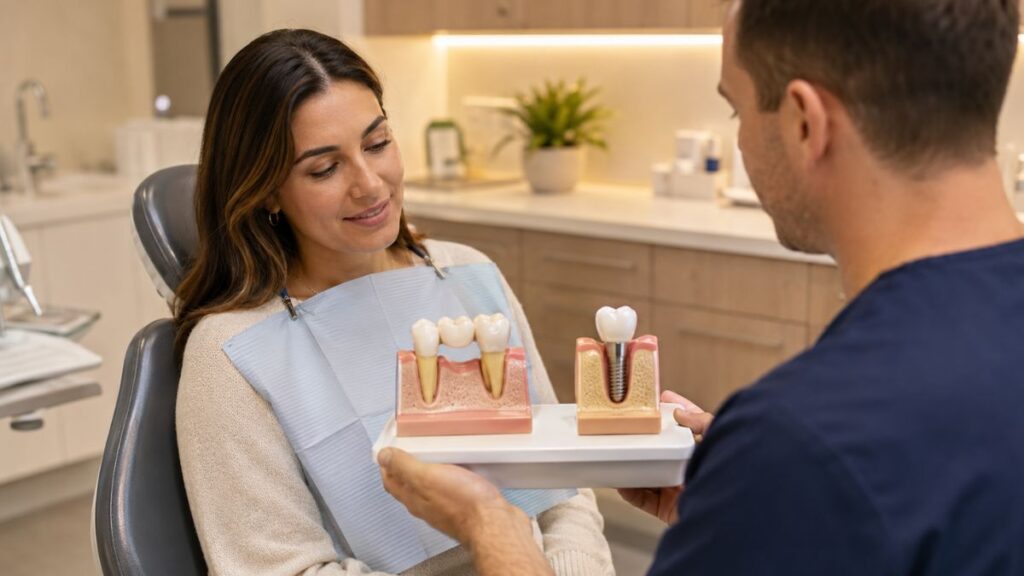
Losing a tooth impacts how you chew, speak, and smile. When comparing a dental bridge with an implant, patients often ask: what is a dental bridge compared to an implant? Briefly, a dental bridge replaces a missing tooth by anchoring an artificial tooth (pontic) onto adjacent natural teeth that have been fitted with crowns. A dental implant, on the other hand, is a biocompatible post placed into the jawbone that acts like a natural root to support its own independent crown.
Understanding the difference between a dental bridge and an implant helps clarify how each option interacts with your mouth. The dental bridge vs implant decision should begin with the condition of your neighboring teeth, jawbone density, gums, bite, and long-term goals. At Walden Dental NY, I take a calm, non-judgmental approach and recommend the option that preserves healthy structure while offering a predictable result.
Dental Bridge vs Implant: The Core Comparison
| Decision factor | Dental bridge | Dental implant |
|---|---|---|
| Support | Teeth beside the gap | Jawbone |
| Nearby teeth | Usually prepared for crowns | Usually left untouched |
| Surgery | No implant surgery | Implant placement required |
| Timeline | Usually shorter | Includes healing |
| Bone | Does not replace the root | Replaces the root |
| Cleaning | Clean beneath the bridge | Clean around the implant crown |
| Main concern | Supporting-tooth decay or gum disease | Gum and bone inflammation |
| Often favored when | Adjacent teeth need crowns | Adjacent teeth are healthy |
The condition of the teeth beside the gap may matter as much as the missing tooth itself, a point many generic comparisons overlook.
Dental Implant vs Bridge: When Is a Bridge More Logical?
Dental bridges may be more conservative when one or both neighboring teeth already have large fillings, fractures, root canal treatment, or another reason to need crowns. Using those planned dental crowns to support the replacement may avoid adding a separate implant procedure.
A bridge may also fit when implant surgery is unsuitable, a nonsurgical option is preferred, or a shorter sequence matters. The supporting teeth still need healthy roots, stable gums, and enough structure.
When Does an Implant Have the Clearer Advantage?
Dental implants may preserve more natural structure when the teeth on both sides are healthy and untouched. Preparing sound teeth only to support a bridge removes tooth structure that cannot be replaced.
An implant may also fit when adequate bone and healthy gums are present, an independent replacement is preferred, and the patient can complete the surgical and healing stages.
Implants cannot develop cavities, but plaque-related inflammation can damage their supporting gums and bone. Regular home care and professional follow-up remain necessary.
What If the Tooth Has Been Missing for Years?
A long-standing space can change the decision. Nearby teeth may tilt, the opposing tooth may move, and bone at the missing site may shrink.
The ADA notes that remaining teeth may shift and bone loss can occur after tooth loss. This does not rule out either option, but current X-rays and a bite evaluation become important.
Which Is Easier to Repair and Maintain?
A bridge connects multiple teeth into one restoration. If decay, fracture, or gum disease affects a supporting tooth, the entire bridge may need evaluation.
An implant and its crown are separate components. A loose or damaged crown does not always mean the implant itself has failed, but the connection, bite, gums, and bone must be checked.
Bridges require daily cleaning beneath the artificial tooth. Implants require careful plaque removal around the crown and gumline. The option you can maintain consistently is often the better long-term choice.
Are Cheap Options for Missing Teeth Worth Considering?
Cheap options for missing teeth can sound attractive when the decision is reduced to the first appointment. A better comparison considers adjacent-tooth health, treatment stages, maintenance, bite forces, and what happens if one part later needs repair.
A removable partial denture may be another option in selected cases. Walden Dental NY provides an itemized plan, coordinates applicable PPO benefits, and offers Sunbit financing without pressure.
How Dr. Sayeed Compares Your Options
For a dental bridge vs implant evaluation, I review:
- Teeth beside the gap
- Bone and gum support
- Location of the missing tooth
- Bite pressure and grinding
- Medical and healing considerations
- Daily maintenance
As a general dentist with restorative and implant experience, I explain each option’s strengths, compromises, and referral needs.
Replace the Missing Tooth Without Guessing
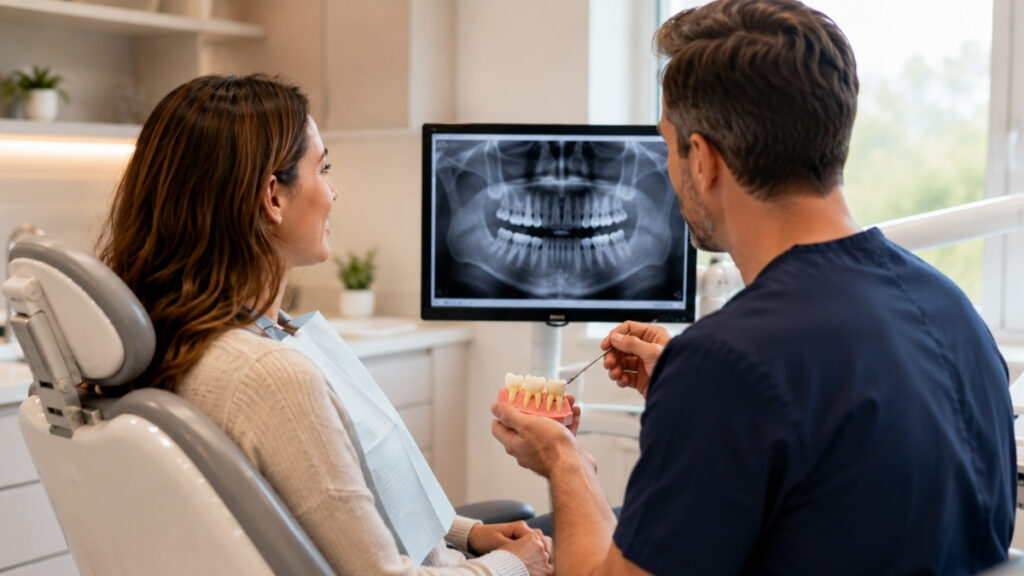
The right dental bridge vs implant choice cannot be made from an online pros-and-cons list alone. A bridge can be the smarter option in one mouth, while an implant may preserve more healthy structure in another.
If you are comparing cheap options for missing teeth in Walden or elsewhere in Orange County, bring us the question before committing to treatment. Dr. Sayeed will show you the X-rays, explain the tradeoffs without pressure, and help you choose a path that fits your health.
Call 845-713-4822 or book online. Dr. Sayeed’s first priority is making you feel comfortable.
Frequently Asked Questions
Which Lasts Longer: Dental Implant vs Bridge?
Both can provide long-term service. Longevity depends on planning, bite forces, gum health, hygiene, decay risk, and regular professional care.
Is a Bridge Better When Nearby Teeth Have Crowns?
It may be. If those teeth already need crowns and have strong roots and gums, a bridge may use restorations that are clinically necessary.
Is an Implant Better for a Front or Back Tooth?
Either may work. Front teeth require careful gum and appearance planning; back teeth must tolerate stronger chewing forces.
 Dr. Ibrahim Sayeed is a licensed Dentist in the State of New York and the lead practitioner at Walden Dental NY. A graduate of the University of the Pacific School of Dentistry with post-graduate training at Brookdale Hospital Medical Center, he has extensive experience in restorative, cosmetic, and preventive dental care.